A Quiet-Hour Listening Session Built Around One Instrument
Plan a quiet-hour listening session around one instrument, with timed passes that reveal how recording choices shape its sound and your attention.
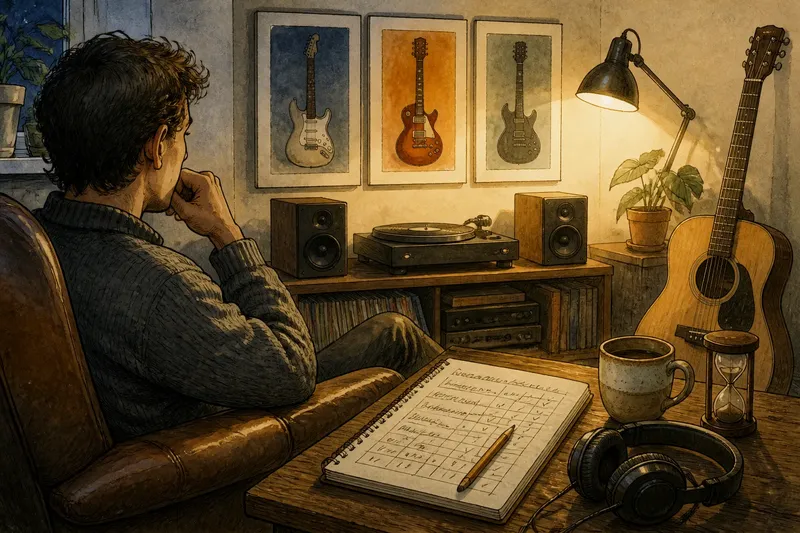
You settle into a chair, press play, and hear the guitar come forward in one song but blur into the mix in another. A quiet-hour listening session can make that contrast easier to hear if you give each song a defined place in the hour and listen for how the recording presents the instrument.
Rather than tracing the instrument’s changing role across a set, focus on what reaches your ears: its tone, clarity, apparent distance, and relationship to the vocal and other sounds. You do not need audio software or specialist terms. A playlist, a timer and a few notes are enough.
Build a three-song queue for a quiet-hour listening session
Choose three songs that feature the same instrument but sound different in some obvious way. For guitar, you might select one track with a clean, exposed guitar sound, one with distortion and a full band, and one where guitar sits behind a singer. Prefer songs you already know, so the recording details—not unfamiliar lyrics or structure—can hold your attention.
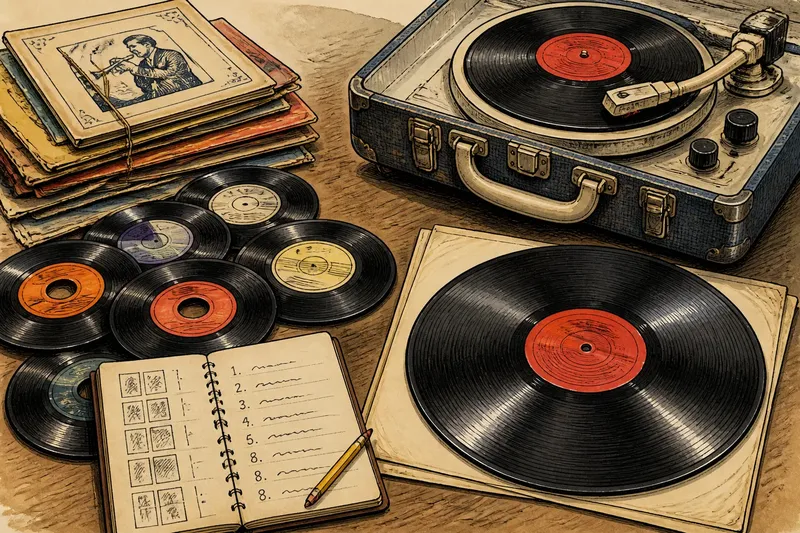
Keep each selection short enough to fit the hour with repeat listens. Use the original track rather than a live version or a remaster if you want a consistent recording to revisit. Put the songs in one playlist, silence notifications, set a timer, and leave your phone out of reach.
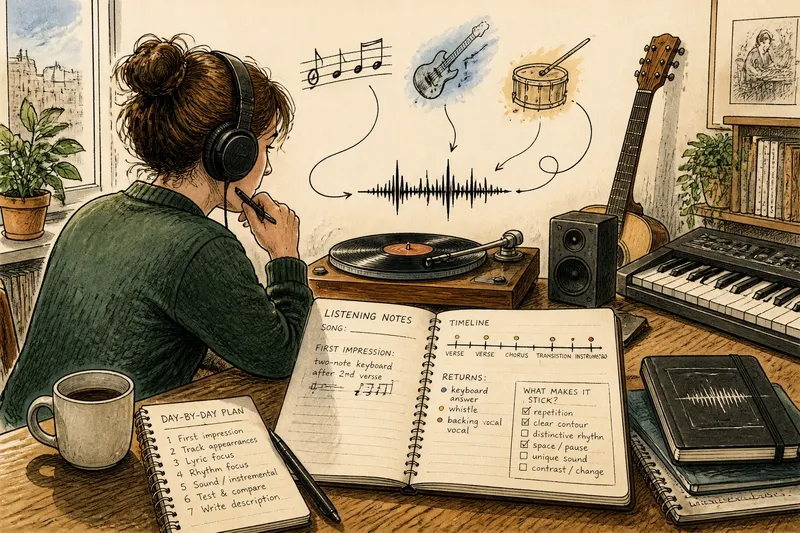
Have paper and a pencil nearby. Write down what you hear after each pass, not while trying to capture every note.
Use the hour for distinct listening passes
Give the session a simple schedule. The timings below are planning choices, not rules; if a song is longer, shorten the replay time rather than rushing the first listen.
- Set up, five minutes: choose the three tracks, put them in a playlist and write down the instrument you will follow.
- Listen to each song once, fifteen minutes: play the tracks without pausing. Note one broad impression of the instrument’s sound in each recording.
- Replay one passage from each song, fifteen minutes: choose a section where the instrument is easy to hear. Listen for tone, clarity and how near or far it seems in the mix.
- Compare the same kind of moment, fifteen minutes: replay a verse, chorus or instrumental section from each track. Note how the instrument sits beside the voice and other parts.
- Write and review, ten minutes: make one concise note per track and identify one audible contrast or an unresolved question.
This plan gives each song a first impression, a closer listen and a fair comparison. If one track takes longer to load or has an extended section, keep the final review brief rather than letting one song consume the session.
Listen for tone, space and clarity
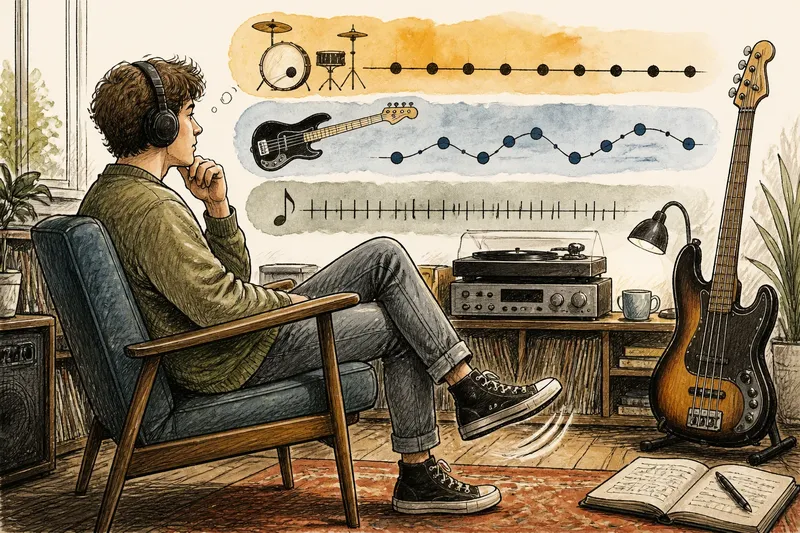
On the first pass, avoid judging whether a recording sounds good or bad. Notice whether the instrument seems bright or mellow, sharp or soft-edged, dry or reverberant. These everyday descriptions are useful even if you cannot name a precise production technique.
On the closer pass, listen for the sound’s apparent place in the mix. Does it feel close and distinct, or blended with the surrounding instruments? Is its attack easy to hear, or softened by sustain, effects or other sounds? Describe the audible result without guessing how it was made.
- Observation: the instrument’s opening notes are clear, but later notes blend with the singer. Decision: if you can still follow its shape, note the contrast; if not, choose a quieter passage for the next replay.
- Observation: the sound has a noticeable lingering tail after each note. Decision: if the tail is easy to hear, describe it as sustained or reverberant; if its source is unclear, record only that the notes seem to linger.
- Observation: the instrument is audible but seems distant beside the vocal. Decision: if that impression holds in another section, note the balance; if the section is crowded, compare a less dense passage instead.
- Observation: a bright tone seems to come from the instrument, but the exact source is uncertain. Decision: if you can describe its character, use words such as bright or plucked; if not, mark the source as unclear rather than guessing.
- Observation: the instrument disappears under a louder section. Decision: if a quieter passage reveals it, use that passage for comparison; if it remains masked, note where it becomes hard to hear and move on.
- Observation: a replay does not answer the question you set. Decision: if a different section offers a clearer contrast, try it once; if not, leave the question unresolved and continue with the schedule.
Compare recordings without guessing at the cause
For a fair comparison, pick a similar kind of passage in each track, such as the first verse or a chorus with the singer present. The arrangement will differ, so do not treat the tracks as controlled comparisons. You are listening for noticeable contrasts, not proving why they occurred.
Imagine you have chosen three guitar tracks: one with a clean sound exposed between vocal lines, one with a distorted guitar among drums and bass, and one where the guitar is soft beneath the singer. You listen to each track once, then replay one verse from each. Your notes say “clear attacks between lines,” “dense, rough-edged sound,” and “soft, partly masked.” In the comparison pass, you replay the choruses and notice the second track’s guitar becomes harder to separate from the band. The resulting answer is specific: the guitar is easiest to distinguish in the first track, while the second has the densest mix. You do not need to claim what equipment or recording technique caused that difference.
If a passage remains unclear, mark it that way. Repeatedly looping a crowded section can consume the hour without improving your description.
What should you listen for in a recording?
How can I tell whether an instrument is close or distant?
Listen to how distinct its attacks and details seem beside the vocal and other parts. Write “clear and forward” or “soft and blended” if those descriptions fit; they report an impression without claiming a precise recording method.
Should I use headphones or speakers?
Choose the option that lets you hear comfortably at a modest volume. Headphones may make small details easier to attend to, while speakers can help you hear the track as part of a room; use the same setup throughout the session for a steadier comparison.
What if I cannot identify the instrument?
Describe the sound rather than forcing a name: “bright plucked notes,” “low sustained tone” or “short metallic accents” can be enough. If identifying the source matters to your question, check the track credits later rather than interrupting the listening pass.
When should I replay a passage?
Replay when you have a specific question, such as whether the instrument stays clear after the singer enters. Listen once for that detail, then continue; if the answer remains uncertain, note the uncertainty and keep to the schedule.
Keep notes that answer a listening question
Use one line per song. Record the passage and the audible detail, such as “first verse—guitar clear between vocal lines” or “chorus—guitar blends into the band.” This is more useful than a general verdict like “good sound.”
At the end, read the three lines and write one comparison in plain language. For example: “The clean guitar is easiest to separate from the voice; the distorted guitar blends with the band.” Add one question for another session only if it would change what you listen for.
A quiet-hour listening session works best when its notes stay tied to what you can actually hear. Keep the playlist and one unresolved question together, so the next time you listen you can start with a clear point of attention.